
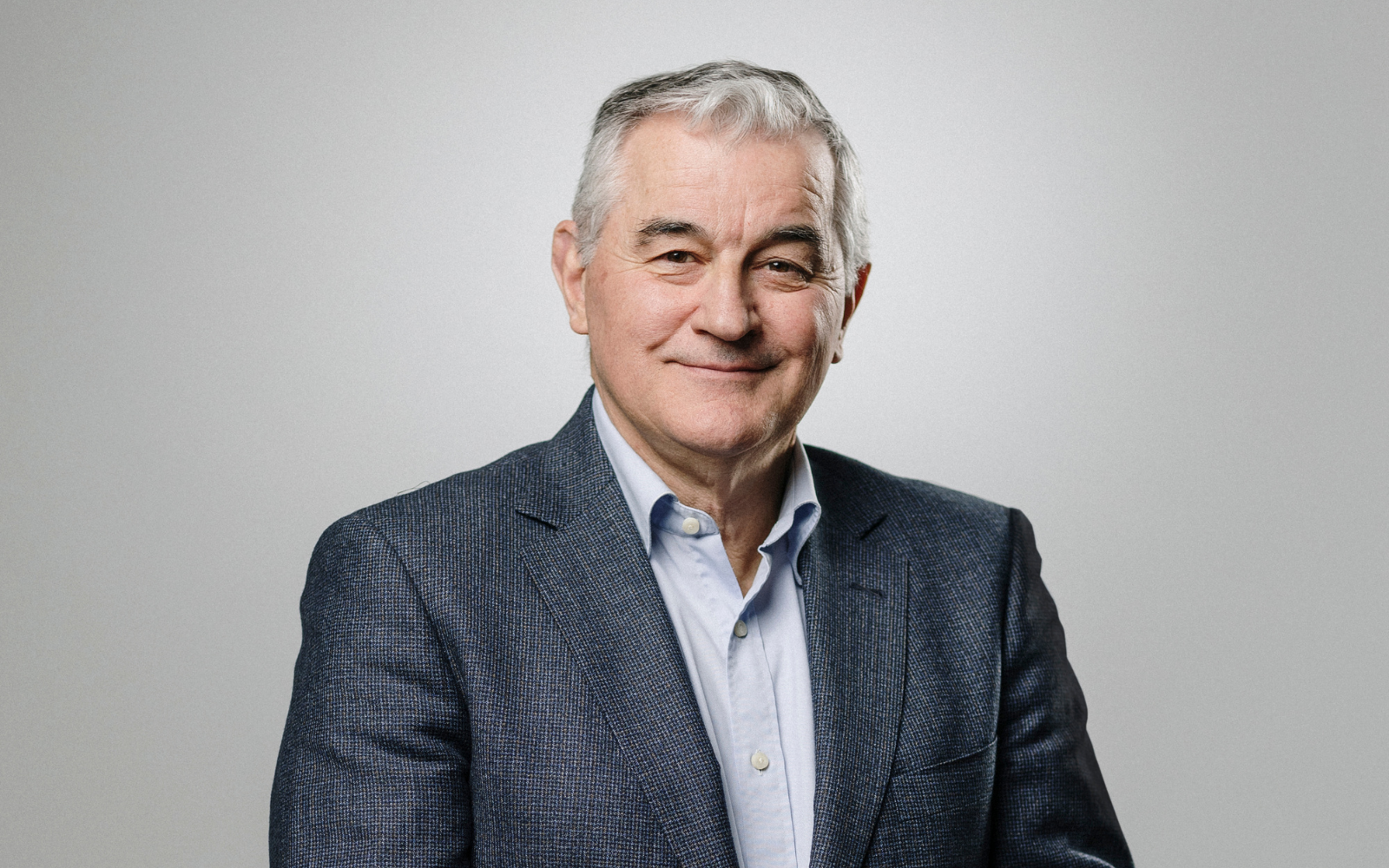
Dámaso Molero Sánchez – CEO, 3PBIOVIAN
The 2024 combination of 3P Biopharmaceuticals and Biovian gives 3PBIOVIAN greater scale and a broader technology base as Dámaso Molero Sánchez looks towards the CDMO’s next phase of growth. He sets out the rationale behind investments in microbial, mammalian and advanced- therapy manufacturing, explains why the US is becoming central to its expansion, and reflects on the pressures facing CDMOs as increasingly complex therapies challenge existing models of cost, talent and manufacturing scale.
What have been the defining milestones in 3PBIOVIAN’s evolution, and where is the business heading next?
Our story goes back around 20 years, during which we have built considerable experience and reached several important milestones. The combination of 3P Biopharmaceuticals with Biovian in 2024 was clearly one of the most significant. For several years, we had been exploring opportunities to establish another manufacturing base in Europe and add new technologies, particularly in advanced therapies and viral vectors. Keensight Capital was the main investor in both businesses, and as we began discussing their future, we realised that bringing them together made a great deal of strategic sense.
While 3P Biopharmaceuticals contributed two decades of experience in microbial and mammalian biologics, a strong international customer base and extensive FDA inspection experience, Biovian
brought its own 20 years of expertise together with complementary capabilities in advanced therapies and viral vectors. The combination significantly broadened our offering across microbial and mammalian expression, adenovirus, adeno-associated virus (AAV), cell therapy and plasmid DNA. Beyond expanding technologies and manufacturing capabilities, it also brought together two organisations with remarkably similar values, a strong customer focus and a shared commitment to scientific excellence, making the integration a natural fit.
. It also gave us a second manufacturing base in Europe, with operations in Pamplona-Noáin and Turku, allowing us to offer customers a much broader range of solutions and support their programmes from early development through clinical and commercial manufacturing.
Another important milestone came in 2019, when our Pamplona-Noáin facility underwent an FDA Pre-Approval Inspection, with a very positive outcome. This was an important step for us and strengthened our confidence in our ability to manufacture for the US market. Biovian also brought significant FDA inspection experience from Turku, so both sides of 3PBIOVIAN now have experience operating under FDA scrutiny. We continued building our presence in the US by opening our first commercial office in Boston in 2023, and we now want to go considerably further by exploring opportunities for more substantial investment and, over time, a deeper operational presence in the market.
All of this brings us to a very important point in our journey. We are preparing 3PBIOVIAN for the next five to ten years, with significant growth, further internationalisation and additional technologies ahead of us. Our ambition is to become one of the most important CDMOs globally, with a strong presence in both Europe and the US. It is an ambitious step, but it is also the natural consequence of the capabilities, experience and international footprint we have built over the past two decades.
Where are you focusing your investments as you prepare 3PBIOVIAN for its next phase of growth?
Today, 3PBIOVIAN remains a mid-sized CDMO, certainly smaller than some of the global players, but we are growing continuously and supporting that growth with significant investment in both Pamplona-Noáin and Turku. Together, the two sites give us complementary capabilities across microbial and mammalian biologics, viral vectors, plasmid DNA and advanced therapies. We have built a strong technological base and accumulated considerable expertise over the years, allowing us to compete internationally with larger players while retaining the flexibility and agility that come
with being a mid-sized organisation.
As we continue to grow, an important objective is to preserve the qualities that have always differentiated us: agility, close collaboration and a highly customer-centric approach. Our ambition is not simply to add capacity, but to scale the organisation while maintaining the responsiveness and flexibility that customers value most.
Microbial manufacturing has been one of our core strengths for many years, and we are continuing to reinforce it with additional 3,000-litre fermentation capacity that we expect to have operational by the end of 2028. Mammalian manufacturing developed later for us, but it is becoming an increasingly important part of our business as we invest in additional 2,000-litre capacity in Pamplona-Noáin and advance monoclonal antibody programmes that could reach the market within the next two to three years. At the same time, we are building our position in gene therapy, plasmid DNA, adenovirus and AAV, while following the evolution of the market carefully. Adenovirus is growing faster than we expected and performing very well for us, whereas we are taking a more cautious approach to AAV and plasmid DNA in the current environment. Even so, we already have significant capacity and a new advanced therapies facility in Turku, which puts us in a strong position as the market develops.
This provides the foundation for the next five to seven years. We currently have around 550 employees and revenues of approximately EUR 80 million, and our objective is to become two to three times larger over that period by continuing to grow and reinforcing our core microbial and mammalian businesses. A further priority is the US, where we want to move beyond our existing commercial office and establish a facility of our own. We are already exploring investment opportunities, with the ambition of developing a substantial presence in the market and ultimately being recognised as a US player by our American customers.
How do you assess the biologics CDMO market today, and where do you see the strongest opportunities ahead?
The biologics CDMO market remains very attractive over the long term, even if we are seeing some fluctuations from year to year. These can be driven by financing conditions, regulatory developments or scientific challenges, as we have seen recently in gene therapy. But the underlying opportunity for CDMOs like us ultimately comes from the development pipelines across the industry, because there will always be new molecules and medicines progressing towards the market. Ultimately, every programme represents the possibility of bringing a new treatment to
patients. That is why, despite fluctuations in the market, we remain very optimistic about the long- term prospects of the industry. Over a five-year horizon, I have no doubt that this will continue to drive growth. For CDMOs, the challenge is to achieve the scale needed to operate productively and efficiently, maintain high quality standards and offer customers strong technical solutions in less time and at a better price, which is an essential part of our strategy. At the same time, CDMOs have an increasingly important role in making these therapies more accessible. Innovation alone is not enough. The industry also needs more efficient development and manufacturing models capable of reducing costs without compromising quality. We see this as one of the key responsibilities of companies like 3PBIOVIAN in the years ahead.In my view, the companies that succeed will be those with strong assets, experienced teams and robust quality systems. Human health will remain a major source of growth, but I also expect animal health to grow much faster than in previous years. Not long ago, veterinary companies working with monoclonal antibodies seemed almost like science fiction, whereas today we regularly receive requests to develop and manufacture biologics for this sector.
Advanced therapies are at a different stage. A few years ago, expectations were extremely high, particularly around gene therapy, with the assumption that these technologies could address a very broad range of diseases, but scientific and therapeutic challenges have since emerged and the therapies themselves remain extremely expensive. As a result, financing has fallen significantly and many companies have reduced both capacity and headcount. I remain very optimistic that science will address the issues currently on the table and that financing will return, but CDMOs also have an important role to play in reducing costs. This is especially relevant in Europe, where national healthcare systems are generally the payers, although the affordability challenge also exists in the US. At current prices, it is difficult for these therapies to grow as quickly as we would like, but I am confident that advances in technology and manufacturing will help bring costs down and create the conditions for the market to grow again.
What is driving the expansion of your mammalian manufacturing capabilities, and how does AAVion fit into your advanced therapies offering?
One of our strategic priorities has been to bring development, clinical manufacturing and commercial manufacturing together within the same organisation, so that we can support customers throughout the progression of their programmes. We already cover all three stages in microbial manufacturing, and our ambition is to achieve the same in mammalian, where we are currently focused mainly on clinical batches but expect to move into routine commercial
manufacturing within the next two to three years. In Pamplona-Noáin, we have capacity at 400-litre and 2,000-litre scales, alongside smaller-scale capabilities such as 50-litre perfusion, and we recently added a new 2,000-litre single-use bioreactor, with another 2,000-litre unit planned for installation and qualification by April next year. This continued investment will allow us to take mammalian programmes from development and clinical supply through to commercial manufacturing, while building a stronger position in both Europe and the US.
Alongside this expansion, we are strengthening our gene therapy offering through AAVion, our platform for AAV development and manufacturing. AAVion is the result of many years of internal development and work with customers, producing material from proof-of-concept and preclinical stages through to clinical trials, while building on our strong track record in adenovirus and our growing experience in AAV. We have brought that accumulated knowledge and technology together with in-house plasmid DNA and AAV manufacturing in a standardised platform that gives customers a clear starting point for developing and manufacturing their products. Rather than reinventing the process for every programme, we adapt and customise a proven framework to the specific requirements of each project, making the process more efficient, productive and controlled while retaining the flexibility that each programme requires.
What sets 3PBIOVIAN apart in a highly competitive CDMO landscape, and where do you see the greatest potential for international expansion?
The difference is not really the technology itself. Many companies can invest in the same equipment and capabilities. What is far more difficult to replicate is a culture built around flexibility, close collaboration and genuine partnership with customers.
If you compare 3PBIOVIAN with larger players such as Lonza or FUJIFILM Diosynth Biotechnologies, we are all investing in high-quality bioreactors, fermenters, chromatography systems and other state-of-the-art manufacturing equipment, often working with the same leading suppliers. Where we differentiate ourselves is in the way we work with customers and organise ourselves around each project. Our advantage lies in our agility, the attention we can give to each programme and our ability to adapt quickly without compromising technical or quality standards. We are not only a service provider. Our objective is to become a trusted long-term partner, supporting customers through the different stages of their product lifecycle and adapting alongside their evolving needs. The project team and project manager are fully supported by the rest of the organisation, which allows customers to remain closely involved and feel that they retain control of their programmes.
That way of working has taken years to establish, but it is now part of our culture and has resulted in a very high level of customer loyalty.
We follow the same approach whether we are working with a large pharmaceutical company or a smaller biotech. Larger customers may bring stronger scientific and technical teams to work alongside us in Pamplona-Noáin or Turku, but smaller customers receive the same level of attention and support. We remember when we were a very small organisation ourselves and how much we valued that support, so we are proud to offer smaller companies the track record and scientific knowledge we have built over the years to help their programmes succeed. Ultimately, regardless of the size of the customer, we organise ourselves around the project and work closely with them throughout its development.
Internationalisation, meanwhile, has been part of our business from the beginning. Even before the creation of 3PBIOVIAN, the vast majority of our customers were outside Spain, and we have long worked with companies across Europe, the US, Australia and China. What is changing now is the scale of our ambition, particularly in the US. Our Boston office has strengthened our commercial presence, but we want to go further by establishing our own process development and manufacturing capabilities there, both for US customers and for European customers seeking US- based manufacturing for the American market. We will continue to reinforce our position in Europe, but establishing a meaningful operational presence in the US is clearly one of our key strategic priorities.
How is 3PBIOVIAN approaching the challenge of attracting, developing and retaining talent as the organisation grows?
Talent is a key priority for us as we grow, and our approach combines close collaboration with universities, investment in training and international recruitment. The situation in Spain has improved considerably in recent years, but there is still more to be done to build an ecosystem that retains Spanish talent while attracting professionals from abroad. Companies, regional governments and the national government all have a role to play in that effort. At 3PBIOVIAN, we work closely with the University of Navarra and the Public University of Navarra, as well as institutions including Universidad CEU San Pablo in Madrid. We have similar relationships in Finland, particularly with universities in Turku and Helsinki, and these partnerships are central to developing and attracting the talent our industry needs.
We are also investing significantly in training because, even when people join us with a strong academic background, they still need practical, industry-specific experience and a solid understanding of GMP. As part of our capital expenditure plan, we intend to create dedicated laboratories and training rooms where new employees can develop these skills before moving into manufacturing and process development. We have also worked with UPNA to develop university micro-credentials covering the biopharmaceutical industry, analytical techniques and GMP, with our own professionals contributing their practical experience to the training of students from disciplines including pharmacy, biology, biochemistry, biotechnology, chemistry and chemical engineering.
This requires a significant investment, but we are very satisfied with the results and believe it is helping to make Navarra and Spain more attractive places for professionals to build their careers. At the same time, we continue to recruit internationally, reflecting the global nature of our business. Today, more than 25 nationalities are represented across our Spanish operations, with several nationalities also represented in Turku. For us, the priority is to identify talent wherever it is, attract the right people and, just as importantly, create an environment where they can continue to develop and want to stay.
What legacy do you hope to leave at 3PBIOVIAN, and what will be needed to fulfil biotechnology’s potential in Europe?
Ultimately, all the effort behind what we do, from our own people to our investors, customers, suppliers and everyone involved in this industry, serves the same purpose: to develop better medicines and therapies and make them accessible to as many people as possible. I believe CDMOs have an important responsibility in that process, and one of the challenges I personally take on is helping to reduce the cost of therapies that remain extremely expensive today. We need to build a successful and sustainable business while contributing to a future in which these treatments are accessible even to people and societies with fewer resources. We are already making progress, little by little, and if I can leave 3PBIOVIAN having contributed to that goal, I would be very proud for it to be part of my legacy.
These medicines and the processes required to develop and manufacture them are extremely complex, which is why progress ultimately depends on collaboration across the entire ecosystem. I remember working with a European Union expert committee on the outlook for industry towards 2030, where we identified biotechnology as increasingly transversal to the economy and as a key part of Europe’s industrial future. To realise that potential, the private sector, universities and public institutions need to work together, particularly when scientific, manufacturing or other
challenges arise. Biotechnology is not something that will simply become part of Europe’s future. It is already part of that future, and I have no doubt that closer collaboration across the ecosystem will be essential to developing the sector further.
Edurne Gil
Head of Marketing and Communications
egil@3pbiovian.com +34 948 34 64 80